Gold Standards: The Art of the Orotone
APRIL 18 - May 23, 2026
Press release | images
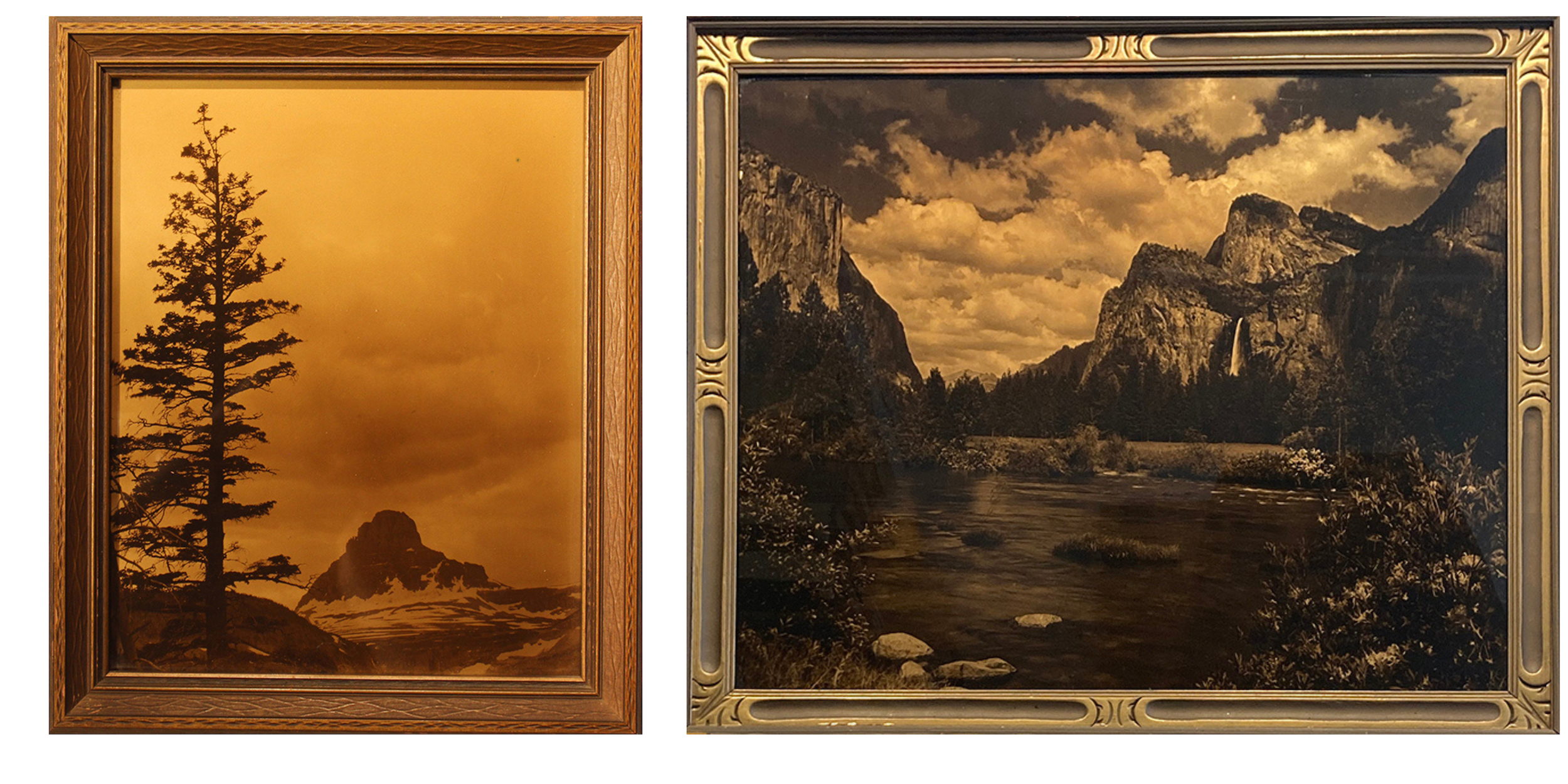
The word “gold” conjures up a wide array of meanings. As a precious metal, the application of gold in the fine arts has been used for centuries to emphasize an object’s perceived value and importance. More recently, the overuse of gold—whether in interior design or in fashion—can swiftly tip the scale towards tasteless gaudiness. In some scenarios meaning only the best, the phrase “gold standard” can also ironically imply an everyday occurrence, as if being accustomed to the regular use of something reserved only for royalty.
At the turn of the twentieth century, when photographs were crafted as material objects to hold and cherish, gold was used in the production of a short-lived process called orotone, resulting in overtly warm-toned images that glistened in the light. Often presented in ornately decorative frames, orotones—sometimes called “Curt-Tones” due to their popular use by the photographer Edward Curtis—were admired by those in the American Arts and Crafts movement for their involved handiwork and singularity.
Robert Mann Gallery is delighted to present Gold Standards: The Art of the Orotone. Most of these unique objects were produced as tourist souvenirs meant to immortalize an ideal yet incomplete picture of the American West, a sort of perpetual golden hour cast upon a regularly contested landscape. Yet within several of these flamboyant frames we find majestic views that would become familiar hallmarks by well-known twentieth-century photographers.
Shortly after the 1906 earthquake in San Francisco, the photographer and scientific inventor Arthur Clarence Pillsbury left the city to set up a permanent photography studio in the newly established Yosemite National Park. Traversing the same paths that Ansel Adams would walk years later, Pillsbury studied with precision the changing light over several days to photograph such emblematic sites such as Vernal Falls and El Capitan.
Shown alongside numerous gilt images made by photographers, many whose names have been lost to history, Pillsbury’s magnificent views are recast here as collectible miniatures, teasing us to reconsider what it means to take home a piece of the places we visit. Part decoration, part memorialization, these illuminated pictures are meant to cause awe as much as amusement.
Drawn from the largest known privately held collection of orotones, Gold Standards presents nearly one hundred of these glowing, metallic photographs to create a spectacular viewing experience.
View the exhibition in person and online starting April 18, 2026. Public visiting hours are Tuesday–Friday, 10am–6pm, and Saturday from 11–6pm. For additional hours please make an appointment. For additional information and press materials, please contact the gallery by email (mail@robertmann.com).
Forget digital RGB, this little-known historic photography technique created golden images
By Digital Camera World
Photographers have been finding creative ways to stylize images with color since long before digital RGB. Back in the late 19th to early 20th century, one of these techniques was orotone, which involved printing an image on glass backed with gold-colored paint to create a shiny and luxurious golden appearance. Perfected by ethnologist and photographer Edward S. Curtis around 1918, orotone – also known as Curt-Tones – were high-end prints that appealed to followers of the Arts and Crafts movement. Read the entire article.