Jeff Brouws | Silent Monoliths: The Coaling Tower Project

Jeff Brouws
Coaling Tower #20, 2013
Archival pigment print

In his new book, Brouws documents the concrete giants that once fueled America’s railroads and still haunt the landscape

Excerpt of Chronogram Magazine article by Brian K. Mahoney

For more than three decades, Jeff Brouws has photographed the American landscape at moments of transition—when buildings, industries, and systems are falling out of use but not yet erased. His latest photobook, Silent Monoliths: The Coaling Tower Project (MIT Press), is a concentrated expression of that long-running interest, focused on the massive concrete coaling towers that once fueled America’s steam-powered railroads.

Built primarily between the 1910s and 1930s, coaling towers were essential infrastructure, designed to rapidly refill locomotive tenders with coal. When railroads converted to diesel power after World War II, the towers became obsolete almost overnight. Yet many still stand today. Not because anyone made a sentimental choice to preserve them, but because they are extraordinarily difficult to remove. “They’re made of concrete and they’re all rebar,” Brouws says. “There’s reinforced steel that runs throughout, so they’re very hard to take down.”

Brouws came to the project almost by accident. While looking at a photobook by a younger photographer, he noticed an image of a coaling tower paired with an unrelated photograph. The image stuck with him. Curious, he searched online and discovered a Wikipedia page cataloging every coaling tower still standing in North America. The list included names, locations, and GPS coordinates. “I was just aghast,” Brouws recalls. “I thought they were mostly gone. And the number was over a hundred.”

Visit Chronogram Magazine for the full article.

View Jeff Brouw’s Artist Page

Emerging From Darkness | Spirit and Shadow

Firefly Reflections, Selangor River, Malaysia, 2017

Elijah Gowin's Interview with Yale University Radio 

In a recent podcast episode hosted by Yale University Radio, Elijah Gowin shares how Spirit and Shadow combines snow and illumination with a poetic sense of light emerging from darkness. 

Gowin explains his process of photographing in the dark, and how he uses flash to illuminate snowflakes that cannot be seen with the human eye.

For the series The Last Firefly, he traveled to Malaysia and Thailand, to capture the mystical communication of fireflies, working with scientists to find their location and timing his photograph sessions with a new moon to allow the fireflies to truly glow before the camera.

Photography's ability to illustrate and construct scenes rather than purely document is something Gowin feels strongly about, and he dives into specific images featured in the exhibition. He shares the influence of his family’s spiritual connections and southern culture in his approach to metaphysical aspects of photography.

To listen to the full interview, please visit Yale University Radio's website.

Mary Mattingly Chosen as the Teiger Mentor in the Arts and Writes “A City of Humors” in The Brooklyn Rail


Prodigies and Portents
, 2025
Archival pigment print
20 x 20 inches
Edition of 5, plus 2 APs

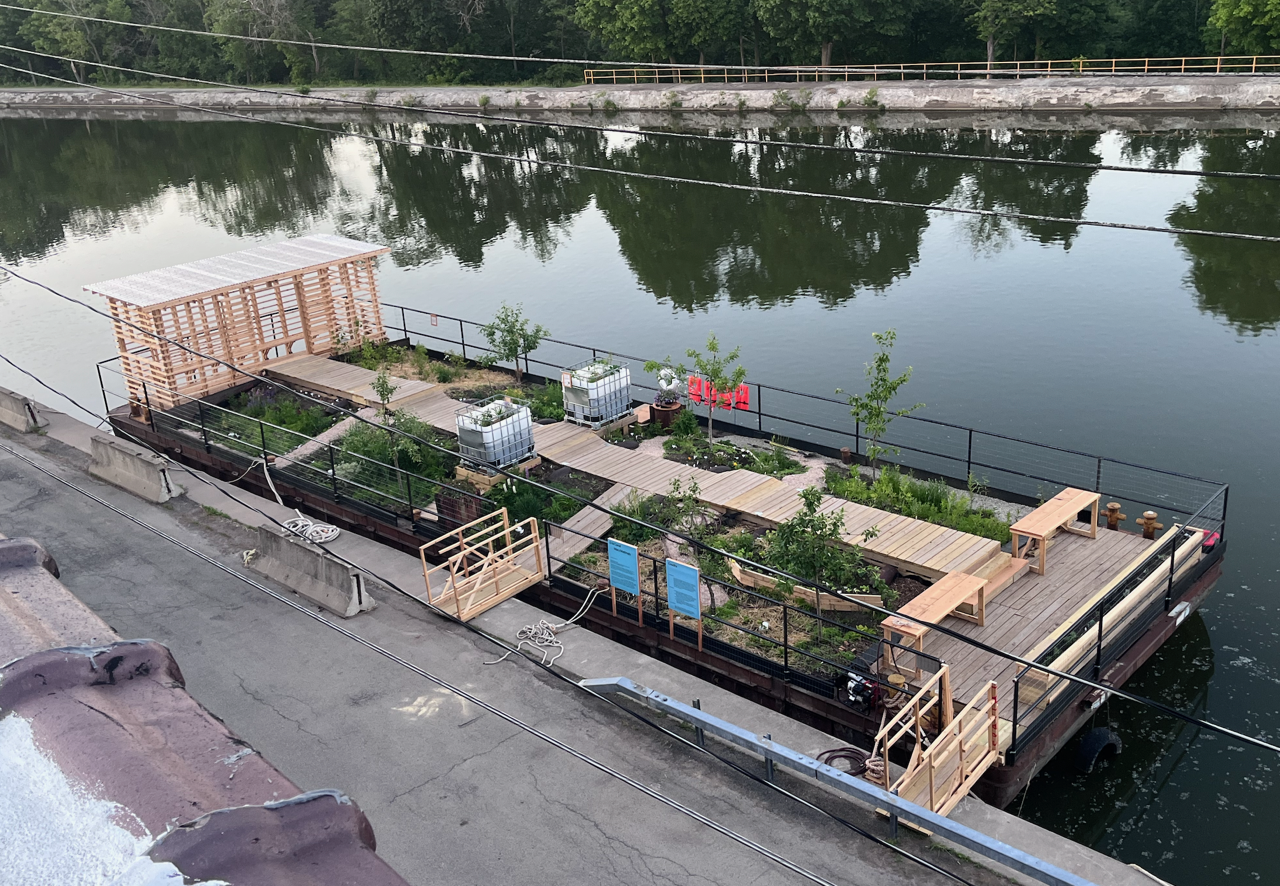
Mary Mattingly is an interdisciplinary artist who constructs and photographs fictional gardens, co-creates floating food forests and is determined to keep imagining utopia


Mary Mattingly’s series Night Gardens has an important subtext regarding our environment. Melancholy becomes a landscape, an alchemy of light and longing, brimming with texture, color, and life.

Mattingly shares, “These photographs draw from the ancient theory of the four humors which were each once thought to govern the body’s balance, mood, and temperament. Plants appear as companions in these states, standing in for cure, portent, and symptom alike.” Mattingly recently expanded on these thoughts in an essay in The Brooklyn Rail, in which she meditates on Robert Burton’s 1621 The Anatomy of Melancholy, using his four humors as proposals for increasing our city’s civic spaces and social services.

We are also happy to share that Mattingly has been selected for the Spring 2026 Teiger Mentor in the Arts at at Cornell University’ College of Architecture, Art, and Planning.

Read “A City of Humors” in The Brooklyn Rail 
Learn More about the Teiger Mentor in the Arts Program

View Mary Mattingly’s Night Gardens: An Afterword

The New Yorker: ringl+pit

Ring|+pit's "Glass and Paper," from 1931.

"About Town" Feature by Vince Aletti

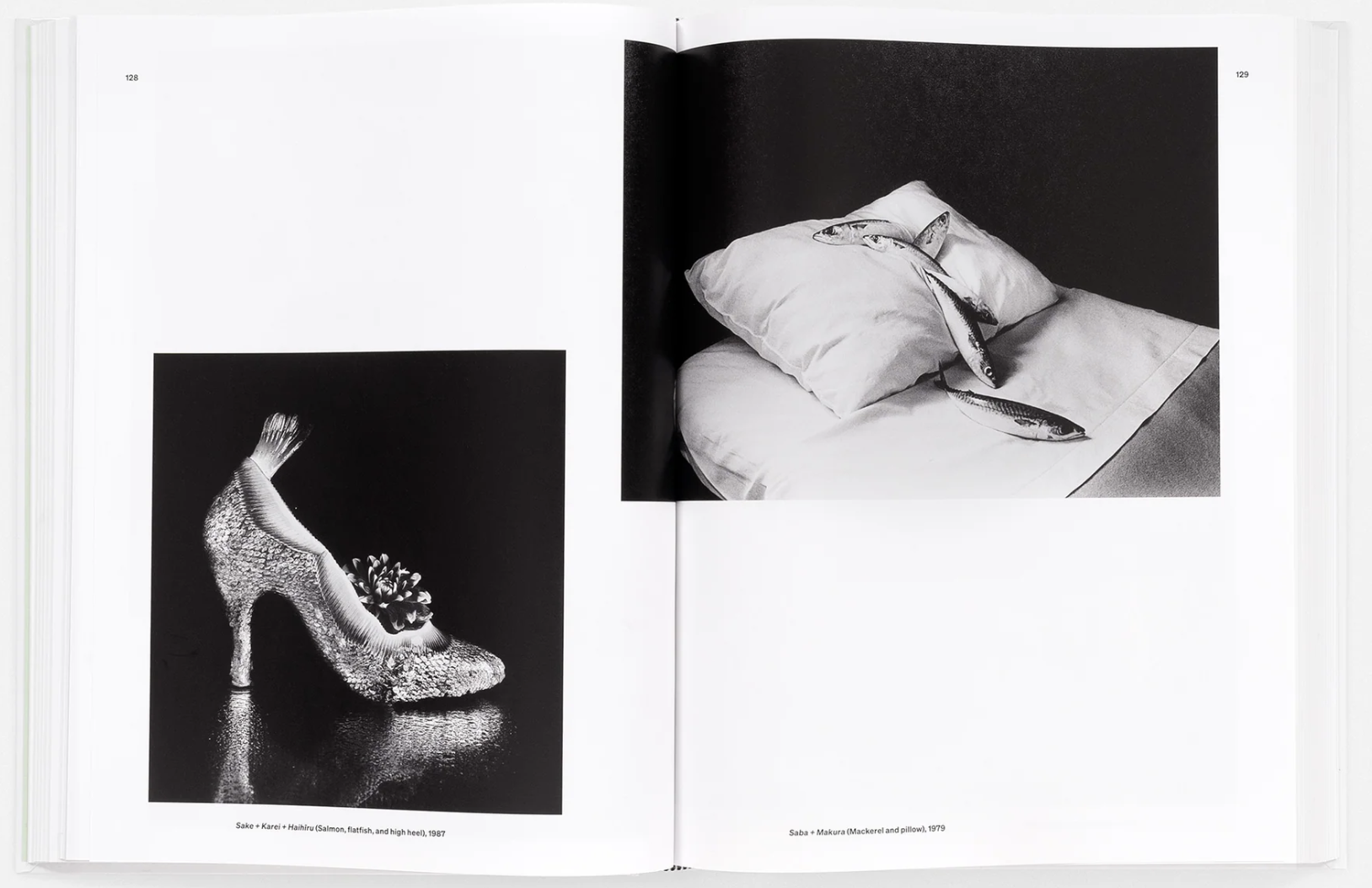
Grete Stern and Ellen Auerbach were in their twenties in 1930, when they opened a studio in Berlin and began collaborating under the name ringl+pit. Their work-black-and-white portraits, still-lifes, and advertising shots, some now on view at Robert Mann gallery—subverts an education in Bauhaus severity with playful, quirky Surrealism. Their speciality was sophistication with an attitude, epitomized by a portrait of Auerbach (a.k.a. pit) giving viewers a knowing side-eye from under a veil. A reserved portrait of Bertolt Brecht stands out in a group that skews decidedly sensuous, including a twisted, fleshy glove, dandelions floating in a glass of water, and a woman's hands in a bowl of soapsuds.

Ring+pit softened the avant-garde's serrated edge, and then added their own sort of bite.

Art New York Magazine: Robert Mann Gallery

Interview with Robert Mann by Kate Stremoukhova

Since its founding in 1985, Robert Mann Gallery has stood at the forefront of fine-art photography, cultivating a dialogue between the masters of the twentieth century and the visionaries of today. Established by Robert Mann—whose early career included work with pioneering photographic galleries such as LIGHT and Lunn—the gallery has long been a beacon for those devoted to the photographic image as both art and language.

In 1999, the gallery relocated to New York’s Chelsea art district, placing it in the heart of the city’s most dynamic creative community. From this setting, Robert Mann Gallery has continued to shape the discourse of photography, presenting exhibitions that explore the medium’s history while embracing its most innovative expressions. Its program spans the iconic works of artists like Ansel Adams, Aaron Siskind, and Berenice Abbott, alongside contemporary figures who challenge the boundaries of form, concept, and perception.

Beyond its exhibition program, the gallery is deeply engaged in the preservation and promotion of photographic excellence. It works closely with collectors, institutions, and museums to ensure that significant works find their rightful place in the canon of art history. Through this dedication, Robert Mann Gallery has become more than a venue —it is a living archive of the evolving photographic imagination.

For nearly four decades, the gallery has remained true to its founding vision: to honor the legacy of photography while nurturing its future. In doing so, Robert Mann Gallery continues to affirm its place as one of New York’s most respected and enduring voices in the world of fine art. 

Read the entire published article with imagery by Art New York Magazine.

Musée Magazine: ringl+pit

Their photographs, here exhibited at Robert Mann Gallery, are more than survivals of a dead avant-garde; they are light-and-texture manifestos, in which materiality, design, and gender become indistinguishable.


Written by: Çisemnaz Çil

As images came to shape the modern psyche, ringl + pit—the joint pseudonym of Grete Stern and Ellen Auerbach—transferred photography into a language of subversion and resistance. Working within Weimar Berlin's charged atmosphere, the duo used the visual idiom of advertising to expose its machinations, converting commercial commissions into subtle acts of rebellion.

Both Stern and Auerbach studied with Walter Peterhans at the Bauhaus, where formal training was wed to utopian vision. Precision was what Peterhans demanded—every surface, shadow, and reflection measured as geometry—but his female students took that order and made it an embodied experience. When Stern and Auerbach opened their Berlin studio in 1930, adopting the childhood nicknames ringl and pit they assumed as children, they began to occupy a border space between commercial and conceptual work. They did ads for cigarette smoke, gloves, and hair color, but beneath the gloss of their creations was a particularly feminine intelligence—a feeling that the picture might attract and judge simultaneously.
Weimar modernism was obsessed with the Neue Frau, the "New Woman" who smoked and worked and drove. But that icon was itself constructed through visual design—a figure negotiated by magazines, posters, and fashion spreads. Ringl + pit appropriated this imagery only to deflate it's power. Their women do not flirt or sell; they think, they resist, or they fade out. In an age of mass illusion, their photographs reclaim control through wit and abstraction.

The earlier works in the exhibition, like Klärchen (1930) and Ellen + Walter Auerbach (1930), illustrate how structure was infused with intimacy by the couple. Klärchen, a close-up of a young woman with her eyes closed, resists the external gaze. The sitter is not muse or model but subject—a turned-in consciousness. The tonal subtlety and sculptural softness of the silver print remind one of Peterhans's technical manner, but the impact is very different: vulnerability undecorated. The title itself, a German diminutive, is a subtext of irony—a gentle reproach to how femininity gets linguistically and visually minimized.

In Ellen + Walter Auerbach, tenderness is dialectical. The entering male hand makes touch a question: who possesses, and who decides? The diagonal of Ellen's arm, the stripes on her shirt, and shadow cutting across her face turn affection into a pattern, intimacy design. The photograph alternates between empathy and constraint, remembering Weimar fascination with the boundary between desire and control. But because Ellen is also co-creator of the work, the power dynamic dissolves. The gaze no longer belongs to one; it moves.

By the time Stern and Auerbach created Dents, London, they had already left Germany. The photo—taken as a commercial for gloves—condenses into essence their adult vision: the world of commodities as a stage of signs. Together on a bare surface, gloves of different materials—leather, mesh, paper cut-out—stage a strange dance of contact and vacancy. Suspended above them, metal letters spell out "DENTS" like a machine halo. The composition recalls Constructivist design, but its tone is ironic rather than utopian.

Here, the human body is present only in trace. The glove, originally a metonym of luxury and control, becomes uncanny: an empty gesture, a ghost of work and of luxury. The photograph is operating on multiple registers—it fulfills the promises of advertising but subverts them by dissonance. What is meant to entice now repels; what is meant to be touched becomes untouchable. It is this dissonance that makes ringl + pit's work anticipatory. Well in advance of postmodern theory and it’s disassembling consumer icons, these two women had already turned commerce into criticism.

The long-term singularity of ringl + pit owes less to formal innovation than to their humor—a facility most often shortchanged in modernist historiography. Their wit is architectural: demanding, ironic, and ruthlessly clear. In their Komol Haircoloring Advertisement, they replaced the model's hair with plastic wigs and silhouettes cut out of cardboard, a preposterous, self-conscious arrangement that ridicules both the product and its fantasy. The duo's approach anticipated the later visual strategies of conceptual artists like Barbara Kruger and Cindy Sherman, who likewise used parody to dismantle systems of representation. 

This was not escapist comedy but protective, born from a historical edge. As Jewish women in increasingly radicalizing Germany, Auerbach and Stern found themselves the targets of both misogynist and antisemitic sentiment. Their images of disconnection—half-hidden faces, averted eyes—can be understood as foretellings of exile, an affective estrangement soon to become actual. When they departed in 1933, their professional partnership dispersed geographically but not mentally; the 1985 Fotografie ringl + pit retrospective would reconstruct their vision on two continents, an act of friendship past displacement.

From our modern vantage, ringl + pit occupy the polemical edge between art and advert, intimacy and irony. They anticipated not only feminist photography but the entire discourse surrounding authorship and the gaze. Their collective practice—two females each in turn photographer and model, designer and subject—was in itself a reworking of patriarchal authorship. From their archive there speaks a shared vision: rigorous, experimental, and profoundly ethical.

In their world, light does not just reveal; it interrogates. Each surface, each reflection, is a site of negotiation—between self and trade, object and sign, woman and image. Their photographs remain luminous not because they are flattering but because they are unflinchingly reflective.

Mary Mattignly's Equilibrium Opens at Pace University Art Gallery on September 26

Immersive installation by Mary Mattingly transforms the gallery into a living laboratory for ecological imagination, resilience, and climate adaptation

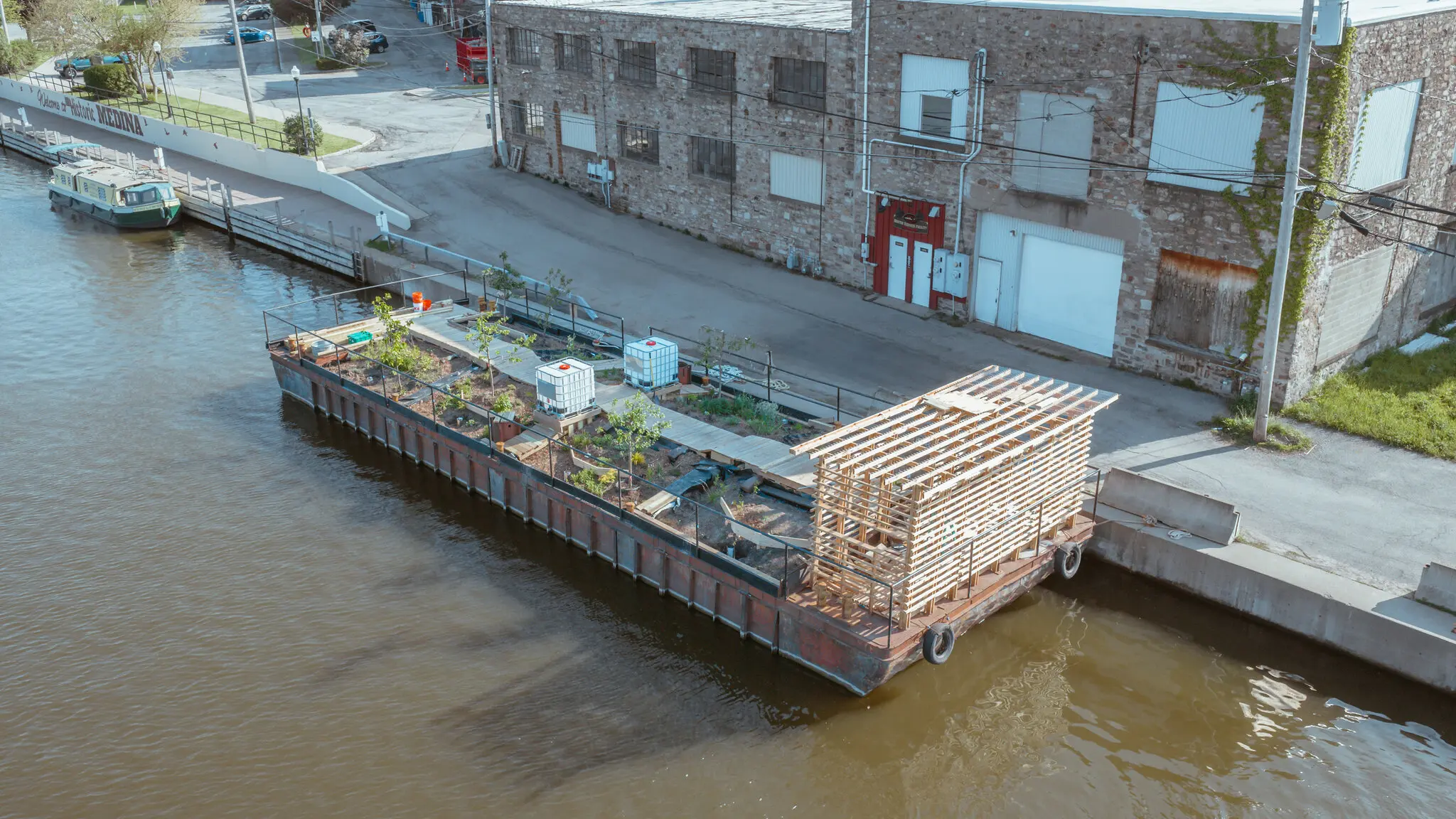
Pace University Art Gallery will present a solo exhibition by interdisciplinary artist Mary Mattingly. Featuring living sculpture, photography, and performance, the exhibition explores themes of ecological transformation, resource equity, and climate adaptation. The exhibition opens with a free public reception on Friday, September 26 from 5pm to 7pm. The exhibition also includes an artist talk with Mattingly on Thursday, October 23, at 2pm. Equilibrium, which remains on view through Saturday, November 1, 2025.

Known for her ambitious civic projects that merge art, environmental inquiry, and community engagement, Mattingly reimagines the gallery as a collaborative laboratory — a space for co-learning, foraging, cultivation, and speculative reflection aimed at developing shared solutions. 

“Since 2001, I’ve lived in New York City, creating sculptural ecosystems that prioritize access to food, shelter, and water,” said Mattingly. “My work often takes the form of participatory initiatives rooted in care, ecological awareness, and collective imagining.”

Equilibrium brings together several ongoing and interconnected bodies of work, including a new site-specific work now in development and Rooted, a living installation composed of plant species selected for their resilience in flood-prone environments like New York City—particularly those affected by saltwater intrusion. The exhibition also includes Salt Forms, sculptural steel discs that accumulate crystalline salt after being submerged in the city’s brackish waterways. Building on the theme of flooding, Mattingly presents buoy bundles and submerged books from her House and Universe series, evoking themes of knowledge loss, overconsumption, and climate-driven decay.

Read the entire press release on Pace University Art Gallery's website.

View Mary Mattingly's Artist Page

When Isaac "Drift" Wright Climbs and Shoots, the World Below Disappears

The Town Summerlin Magazine | Eye in The Sky

Written by Melinda Sheckells

It is not fear that drives him-he has never been afraid of heights-but something closer to transcendence. His camera lens has peered down from the cables of the Brooklyn Bridge, across the crown of the Empire State Building and over the outstretched arms of Christ the Redeemer in Rio de Janeiro. The images he brings back are not just records of daring; they are portals into resilience and redemption. This fall, Las Vegas will see that vision up close.

FAS44, Michael Frey's Freyboy Art Salon, is bringing Wright to the desert for his first Las Vegas photo exhibition, "Coming Home," on view from Sept. 18 through Oct. 25. Sixteen large-scale photographs, each distilled from years of searching and scaling, will fill the gallery. The collection, in partnership with New York's Robert Mann Gallery in New York City, offers an invitation into the artist's paradoxical world where danger and serenity hang in the balance, where risk becomes meditation and where survival itself becomes art.

Wright's trajectory is a story almost too improbable for fiction. A U.S. Army veteran, he began urban exploring as a way to cope with displacement, PTSD and bipolar disorder. Climbing became a form of release, his body and camera entwined in a practice that was both spiritual and artistic. The photos he took while mounting massive structures drew attention, but with the notoriety also came with consequences. An arrest followed. In 2020, when he was on his way to Las Vegas to shoot, he was instead taken into custody. What followed was a legal battle that nearly consumed him, with charges so severe they threatened decades of imprisonment.

In the crucible of incarceration, Wright kept writing. On inmate request forms, in notebooks, on scraps of paper, he scribbled fragments that would later become the foundation of his first photo book, "It Was Never Dark." The title itself is an allegory, born from his experience of a jail cell that was never truly dark. The fluorescent bulb that never switched off, that intrusive light, in time became a source of strength. "It bothered me until I learned how to use it," he says. "It was never truly dark, because I always had this light on the inside." Published this year, the self-produced coffee table book combines six years of photographs with raw, handwritten passages.

Now, as he prepares for Las Vegas, Wright describes his work less as art than as spiritual practice. "I take fewer images now, but more intentional ones," he says. "Each photograph is a timestamp, a version of myself alive in that moment. The work forced me to embody what it was teaching me: to live beyond self-preservation, to be a vessel.

Among the photographs in "Coming Home" are works already gaining iconic status. "Face to Face," taken from the shoulder of Christ the Redeemer, is one of Wright's favorites. "Empire State of Mind" memorializes the climb that led to another arrest at his opening night reception at Robert Mann Gallery in New York City earlier this year. Another, "And When We Die, It Will Feel Like This," shot from the Deer Isle Bridge in Maine, shrouded in fog, radiates warmth and transcendence. "I don't believe in death," Wright says. "When it's all said and done, I think we go back into a pool of light. My work tries to reflect that."

For Michael Frey, founder of FAS44, the ability to bring Wright's work to Las Vegas in collaboration with a major New York City gallery marks a turning point. Frey has collected fine art photography for more than three decades, assembling over 100 works. When he opened FAS44 three years ago, he wanted to introduce Las Vegas to fine art photography beyond the glossy, oversized images that line Strip hotel corridors. "I wanted to raise the cultural level and show people what photography really is," he says. The salon hosts exhibitions with renowned names such as Cig Harvey, Roger Deakins and Jane Hilton and partners with local nonprofits.

Frey first encountered Wright's work at the AIPAD Photography Show in New York. At Robert Mann's booth, he stopped at an image of dangling legs over Central Park South. "I said, 'Oh my God, who is this?" he recalls. "Robert told me it was Drift, and I thought, 'this is amazing. People in Vegas will get this."

The collaboration grew naturally. Frey visited Wright's New York studio and was struck not just by the daring of the photos, but by the story behind them. "He's just such a cool guy," Frey says. "He has this incredible trajectory. People used to want to put him in jail for climbing buildings, and now they're calling him to climb their buildings for commissions."

Wright's process is meticulous. He scouts and waits for the right weather, the right fog and the right light. He works with drones, GoPros and a Nikon Z7 II, but also with his own body as part of the frame. His feet often dangle into the photograph, not as a stunt, but as a reminder of human presence against the immensity of a cityscape. In recent years, those feet have been clad in Nike Dunks, a tribute to his younger brother, who died by suicide. Wright has turned the shoes into an ongoing global series, each pair carefully color-coordinated to the building or bridge he scales. He imagines one day displaying them alongside the photographs.

Las Vegas, for Wright, carries its own resonance. It was the destination he never reached in 2020, the city he was driving toward when he was arrested. Returning now feels less like a debut than a fulfillment. "I named the show "Coming Home" because this period has felt very much like a homecoming for me," he says. "Despite everything, I had to rebuild, to heal. Now I feel fully integrated as a human being. All the parts of myself are finally working together. That's what this show represents."

Frey believes Las Vegas is ready. He has long argued that the city's cultural life begs for extension beyond nightclubs and sports arenas. "I've known people for 20, 30, 40 years, and I have to beg them to come [to my shows]," he admits. "They'll fly thousands of miles to see the Louvre, but won't drive 20 minutes. It's not about supporting me-it's about showing artists that Vegas is a serious city. Otherwise we stagnate culturally.”

But for those who do come, the experience promises to be electric. Wright's images channel the forbidden and the sublime. Standing before them, one feels both the danger of the void and the serenity of surrender. It is a balance Wright knows intimately. "My work taught me to live beyond self-preservation," he says. "It's about love and expansion. Even when I was facing 50 years in prison, I believed in the light. And the light always wins."

Drift will have an exhibition in Las Vegas, Nevada with our colleague, FAS44

Drift, for the first time, brings his lens to the heart of the Las Vegas arts and culture scene.

Sixteen large-scale photographs, each distilled from years of searching and scaling, will fill the gallery. The collection, in partnership with Robert Mann Gallery in New York City, offers an invitation into the artist's paradoxical world where danger and serenity hang in the balance, where risk becomes meditation and where survival itself becomes art.


Exhibition Dates: September 18 to October 25, 2025
Opening Reception: Thursday, September 18, 4:30 to 7:00 PM
Location: FAS44, 4044 Dean Martin Dr Las Vegas, NV 89103

Opening Soon: The Bridges of Michael Kenna

Pease join us for the opening on Thursday, September 4, 6-8pm and a reception with the artist on Friday, September 26, 6-8pm

Bridges span rivers, connect cities, and carry us over what once seemed impassable. Where once there was only a divide — a river too wide, a ravine too deep — now there is a line drawn through space. We drive over bridges, walk across them, sometimes without even thinking. Yet Michael Kenna impressively photographs these bridges stretching across the globe in a unique light of the feat of human construction through time.


To open the fall 2025 season, Robert Mann Gallery is pleased to announce, The Bridges of Michael Kenna, on view from September 4 through October 18, 2025.

Kenna’s first show with Robert Mann Gallery opened in 1997 around the time the movie, The Bridges of Madison County was released; a moving love story about a photographer on an assignment to shoot historic bridges. Kenna shares this fascination in capturing these structures, “Bridge structures are usually geometric and stationary with straight lines, verticals, horizontals and other angular constructs. The universe is constantly moving, flowing organic, uncontrollable and unpredictable. The abstract relationship between the two, almost like yin and yang, can be visually stunning and continues to fascinate and attract me.”


Read the entire press release

Source: https://www.robertmann.com/the-bridges-of-...